
Your SIEM now sees every agent decision.
Conduct's audit log now streams to the tools your security team already watches. One command, no new infrastructure. And the log it streams is now complete: decisions from the LLM gateway join the same tamper-evident chain as everything else.
Why the SIEM matters
Security teams don't want another console. When a coding agent tries to read a secrets file, push to a protected branch or call an unapproved MCP server, the analyst on call should see it in the same place they see endpoint alerts and login anomalies. That means Splunk, Microsoft Sentinel, CrowdStrike Falcon LogScale, or whatever sits behind your collector.
Until now, getting Conduct's decisions there meant exporting from the console or building against the API. Both work for an audit. Neither is a feed.
One command
pip install -U conduct-cli
conduct audit feed --follow --output /var/log/conduct/audit.ndjson
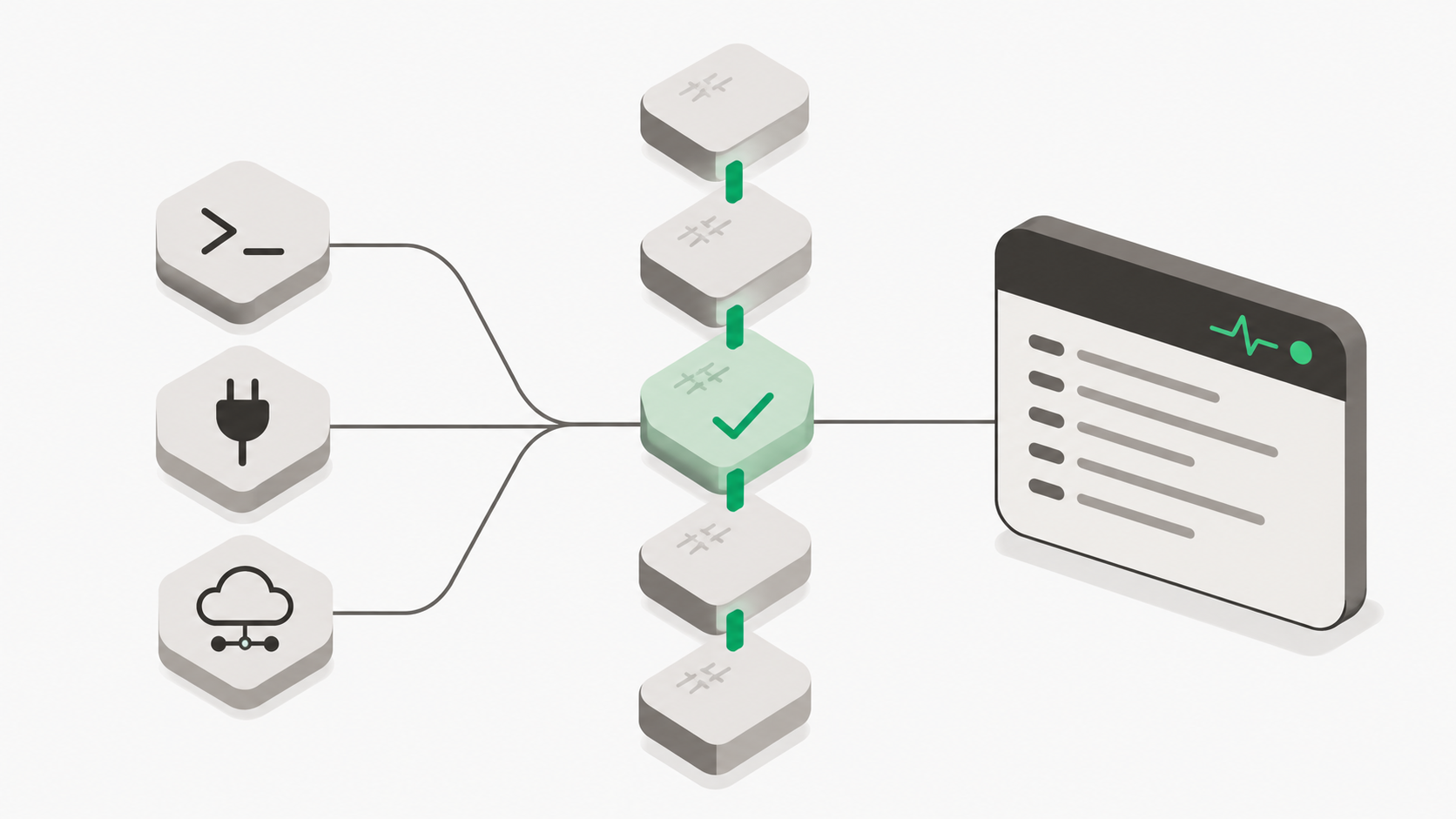
conduct audit feed pages through your workspace's audit events and writes one JSON object per line. Point Splunk Universal Forwarder, Azure Monitor Agent, Falcon LogScale Collector, Fluent Bit or Vector at the file and you're done. Every collector already knows how to tail NDJSON.
- Resumable. The cursor is checkpointed after every page is written. Restart the process, reboot the host, and it picks up where it stopped. Nothing is skipped and nothing is written twice.
- Pull, not push. The feed runs inside your network and reaches out to Conduct. No inbound firewall rule, no public HTTP endpoint for us to post to.
- Same permission as the console. The feed is served over Conduct's MCP endpoint and checks the same
platform.audit_log.viewpermission as the Audit page. Transport is never the boundary; the API is. - Every event carries its chain fields.
previous_hash,entry_hashand the policy hash in force at the time travel with each line, so your SIEM holds evidence, not just logs.
Know the feed is flowing
A feed that silently stops is worse than no feed. The Audit page in the console now shows a SIEM feed card: every collector pulling for the workspace, when it last pulled, how far behind it is, and how many events it took. If a collector hasn't pulled in 15 minutes it is marked stale, so you find out from Conduct before you find out from an empty dashboard.
Closing the gap
Conduct enforces one policy across three surfaces: the CLI hooks inside coding agents, MCP tool calls, and the LLM gateway. Every decision is appended to a SHA-256 hash chain per workspace. Each entry commits to the one before it, so a deleted or edited row breaks the chain where it happened.
When we pulled our own workspace through the new feed, the numbers said something we didn't like. Hook and MCP decisions were chained. Gateway decisions were recorded, but written without chain fields. They were in the log, but outside the evidence.
That's fixed. Every audit writer, including the gateway, approvals, policy edits, SSO logins and ingested events, now goes through a single chain-append path. A gateway decision is as provable as a blocked shell command.
The bug verification found
We also ran the chain verifier offline against the exported feed. Every entry hash checked out. Nothing had been altered. But a few entries shared the same predecessor: two hook events landing milliseconds apart had both read the same chain tail and linked to it. The chain had forked.
That is a race, not tampering, but an auditor can't tell the difference from a broken chain alone. So the append path now takes a per-workspace Postgres advisory lock, reads the tail and stamps the timestamp inside that lock, and guarantees each entry sorts strictly after the one it links to. Our regression test fires 30 concurrent writers at one workspace and checks the result is a single straight line.
You can check any export yourself, with no access to Conduct at all:
conduct audit verify /var/log/conduct/audit.ndjson
It recomputes every hash and walks every link. Add --allow-gaps when verifying a time window that doesn't start at the beginning of the workspace's history.
Why we're telling you
A tamper-evident log is only worth something if someone actually checks it. We checked ours, found two real problems, and fixed both before writing this post. Your SIEM now gets every decision, from every surface, in a chain you can verify without trusting us.